
Discover Real-World Success with RAM Spreaders
Explore our case studies to see how RAM Spreaders delivers innovative and reliable container handling solutions worldwide. From improving port efficiency to enhancing bulk handling operations, our real-world success stories showcase the impact of our cutting-edge technology and expertise.

Case Study - Pit-To-Rail CBH Transloading in Canada
Moving critical minerals, such as spodumene, which is a key source of lithium, between a remote mine in Northern Canada and the port has been made easier for Solurail through the integration of the RAM Revolver on a reach stacker and ISG containers, creating a ‘pit-to-rail’ containerised bulk handling (CBH) transloading solution.
This spodumene project in Northern Canada demonstrates what’s possible when you combine world-class technology partners with a dedicated team focused on solving complex challenges.
THE RESULTS:
✓ Drastic reduction in product loss vs. traditional methods.
✓ Reliable operations from -45°C to +40°C.
✓ Zero heavy infrastructure CAPEX required.
✓ Contamination-free handling with RAM Revolver and ISG containers.
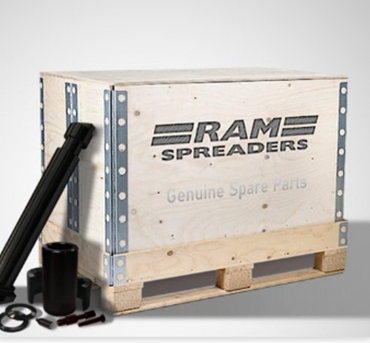
Case Study - The Importance of Genuine Spare Parts
When it comes to maintaining a spreader, every component counts – not just for performance, but for safety, reliability and warranty compliance.
In the fast-paced and safety-sensitive world of container handling, equipment reliability is everything. Spreader components such as twistlocks, hydraulic units, and electrical systems all play a pivotal role in smooth operations. But when it comes to safety, the quality of these parts can mean the difference between seamless performance and catastrophic failure.
This revealing case study reports on the critical importance of only using genuine OEM spare parts and why safety should always come first in procurement decisions.

White Paper - Benefits of Twin40 Handling Operations
With hundreds of SingFlex Tandem Headblock units in operation worldwide since its launch over a decade ago, a ‘white paper’ reports on the productivity, financial and operational benefits when using a tandem headblock system, allowing the crane operator to handle multiple containers in a single lift cycle on single hoist STS cranes.
The white paper consists of three parts:
Part 1: Vessel Turnaround
Part 2: Capital Cost
Part 3: Revenue Increase
Each part also contains video links demonstrating each aspect of the operation.

CBH Revolver Reach-Stacker turning the tables
Problem: Eti Baker used a rotating tabletop frame system to handle pyrite concentrate at their Mazidagi plant in Mardin, Turkey. The tabletop system was temporary, slow and complex to use.
Solution: Eti Baker looked for a reliable, cost-effective bulk handling solution, which was quick to set up and use in their operations. The RAM Revolver on a reach stacker ticked all these boxes, as well as providing minimal impact to the environment and zero loss of commodity when handled.
“Our revolver customer base has expanded from ship loading to now 50% of orders being inland bulk logistics” – Cameron Hay, Head of Marketing & Sales

Low Capital for exporting copper concentrate using ships crane
Problem: The demand for copper is expected to remain high, especially in the electrical and electronics industries. If the right systems for handling copper concentrate are not in place, the quality of the commodity can become degraded, and be lost in the handling process.
Solution: For ports and terminals exporting commodities such as copper concentrate, the capital cost of building a bulk loading infrastructure can be a costly exercise. However, the RAM Revolver on a ship crane was a cost-effective solution.
“Patrick was able to utilize this new revolving spreader technology to export copper concentrate for our client with very little capital”
Adrian Howard – Commercial Director – Patrick Ports & Stevedoring.

Trends in Tandem Lifting
Problem: In this day of mega vessels, tight frame times and endless competition, container terminals are under pressure to handle more whilst not overspending.
Solution: Many terminals have opted for tandem lifting using the SingFlex ship to shore crane headblock, which is a cost-effective solution in comparison to a dual hoist STS crane. SingFlex tandem headblock improves productivity with faster ship operations, shorter berth stays and a more effective use of capital per container.
“We are pleased that the single hoist tandem has allowed DP World to work more productively and as such, attract more business”
Andrew Bowen, Head of Engineering – London Gateway

South American Grain Export Revolution
Problem: Around the world, the global population has continued to surge which reflects the increase in demand for grains like soya. Exporting these grain commodities are a real challenge, as terminals are already working at full capacity and investment for a bulk terminal will be costly.
Solution: A terminal in South America, adopted the ‘Revolver’ Containerised Bulk Handling (CBH) with sealed containers, as it’s cost effective, efficient and protects the value of their customer’s product.
- CBH system allows exporters to take crane to any container terminal
- Lowered logistical costs offsets higher inflation in some Latin American countries.
- No complex ship loading equipment necessary
- Flexible – containers can be re-located to other operation ports with ‘Revolver’ rotating spreader.

Tandem Lifting Energy Saving Benefits
Problem: With the world transitioning to a sustainable future, the port industry is under pressure to be energy efficient.
Solution: Container terminals are opting for single hoist cranes as they are cheaper to build, weigh less and consume less energy when in tandem operation than dual hoist cranes. But what other benefits will follow?
- Capable of handling 2 x 20/40/45’ or 4 x 20’ containers
- 100 boxes in 50 moves – speeding up quayside operations
- Increased energy efficiency
- Lower crane intensity
- Allows up to 75% multi-lift with more than 40% in tandem
- Spreader change-over in less than 2 minutes without the need for manual intervention.

Award Winning Truck to Rail Bi-Modal Containerised Bulk Handling
Problem: At 4,000 meters above sea level, the elevated and remote location of MMG Las Bambas mine posed problems of transporting copper concentrate to market. The team had to find some innovative solutions to achieve a safe and effective method for transporting product to market.
Solution: Following a study, MMG worked with Matarani Port and chose RAM’s Containerised Bulk Handling (CBH) Bi-Modal solution. The solution enabled the transportation of concentrate in special sealed containers 443km by road and 286km by rail to Matarani Port, where it is offloaded from the containers by ‘revolver’ rotating spreader into hopper fed ship loaders.
MMG has indeed set the benchmark for CBH intermodal bulk logistics in South America and won the IBJ Innovative Technology Award in 2016 for a solution that integrated its copper concentrate loading requirements into an existing port infrastructure. Its only a matter of time when this innovative solution becomes common place.

Automizing the manual link in maritime supply chains? An analysis of twistlock handling automation in container terminals
Maritime Transport Research has produced an article that takes a qualitative and quantitative approach to the potential barriers, prerequisites and optimization potentials for automating the twistlock handling process in container terminals. The research report considers implementation strategies, their key to success and barriers that container terminals may face. This report signals how the PinSmart automated twistlock handling machine could help ports improve their container handling at the quay crane.
“Impacts on terminal efficiency, cargo handling speed and ship turnaround times are possible […] improvements in labour utilization are promising” Maritime Transport Research (15pg:2021)